Nature, holistic school
Nature, holistic school
Non-formal education. Holistic approach. Interdisciplinary.
"Trendy", "fancy" terms? Probably ... but they do, however, relate to quite simple realities. And it's great, I think, that they are becoming important!
The concept of "holistic" refers, as suggested by the English word - "whole", to the approach of man as a whole, on all development plans. The holistic approach in education implies that the learner (who may be a child or adult) is seen not only as a "sum" of plans but also as the total dynamic relationships between them, the "finite outcome" being the individual, unique and unrepeatable. Beyond the "esoteric" connotation that sometimes joins this term, it is about recognizing the one who learns more than a robot that memorizes and reproduces, as well as learning situations that are much more than "a nose stuck in a book".
Okay, but what's the relationship between being in nature and this whole philosophy? There is one. Nature is a school. If we are to be very accurate, it is the first school in the evolution of humanity, born together with man. On the scale of anthropological evolution, the moment of technological development is very recent; therefore, in the genetic code of any human, child, baby - whether born up in a mountain village or in the middle of a large urban agglomeration - the same ancestral expectations from the world and from life, as well as the same set of "tools" and capacities to deal with them. It is about the expectations regarding life in the natural environment and of the survival instincts in this environment (that is why every little child approaches fire with great caution, intuitively - the generations of ancestors inside him "shout" that it is dangerous. That is also why children have to be actively and consciously trained to beware of sockets, cars, etc. - still, there have not been enough generations to live in a technologically-engineered environment to change the DNA and man to come into this world already "prepared" for life in the artificial environment).
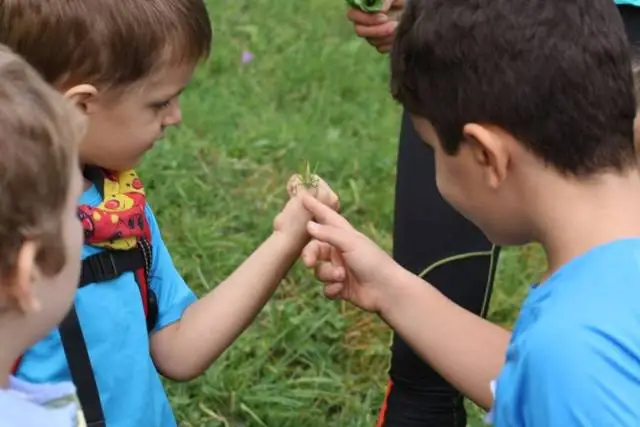
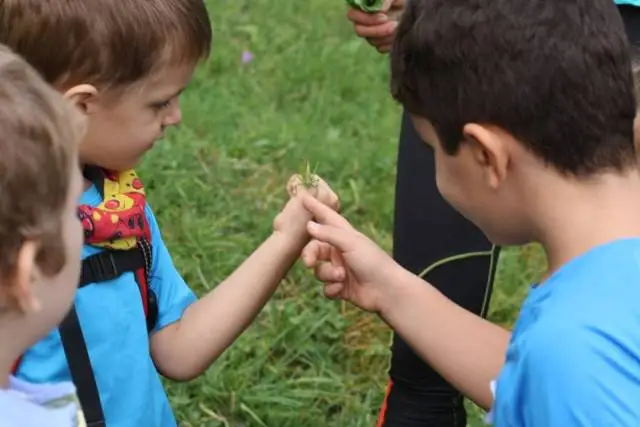
A child with typical neuromotor development is thus prepared to learn from nature. To absorb information from the environment to which he or she is exposed and to make his or her own connections from the information the child has access to. What happens to children of the "digital age"? Without being in the position or intending to deliver a "study" (those interested can find enough bibliography anyway), a simple observation at the current social level can give a picture that is ... quite worrying, I would say. Many children and young adults are not only "estranged from nature", but the natural learning mechanisms themselves appear to be deficient.
(Photo: Iulian Olaru)
But again, what is the role of the forest and the mountains in this entire story?
Studies conducted by outdoor pedagogy specialists and "Forest School" programs have revealed a number of benefits of regular activity in the middle of nature for the holistic development of the person. They cover the following levels:
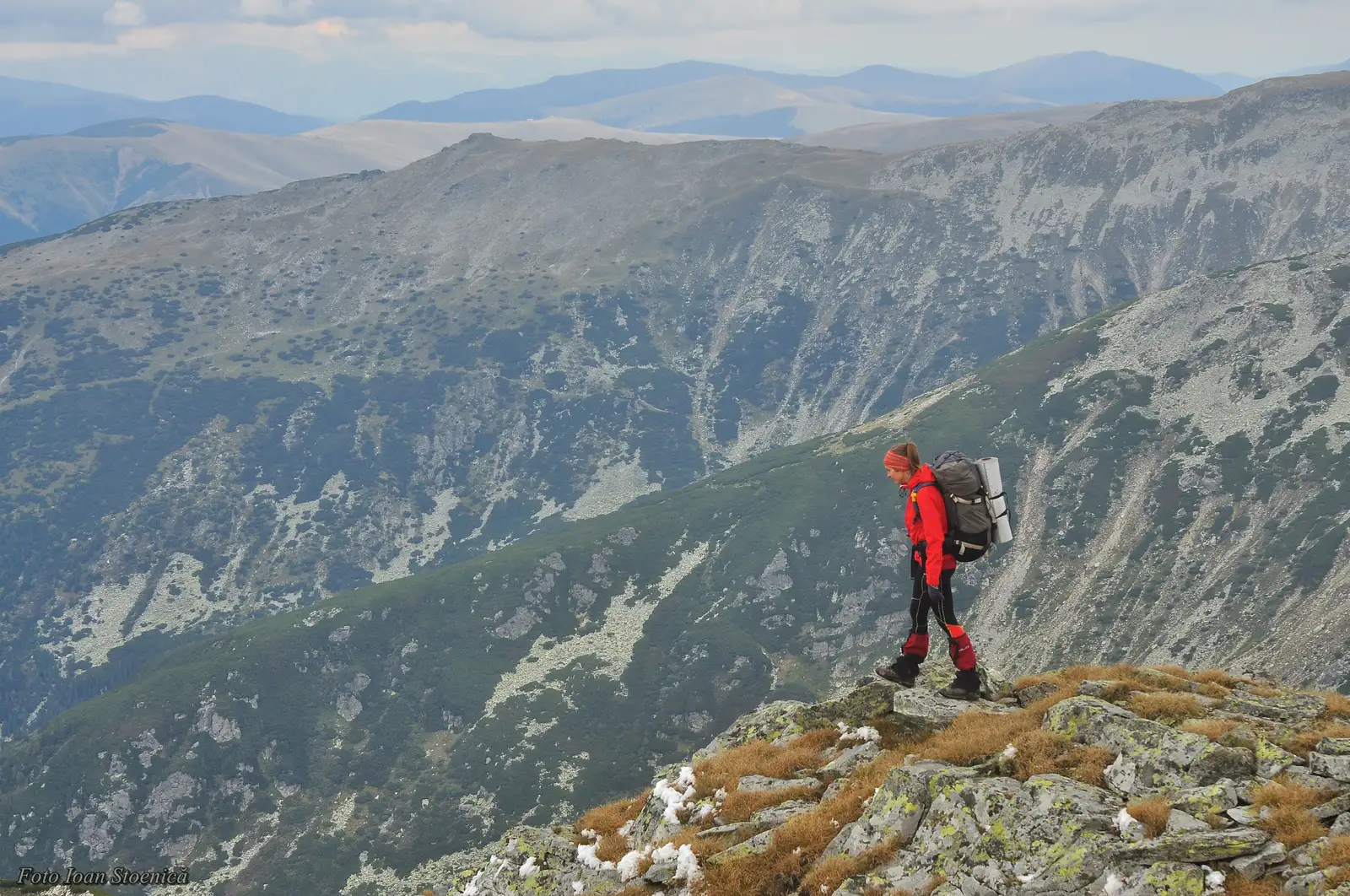
- Physical. Walking in nature obviously contributes to the physical development of man. Beyond "losing weight" and "muscle building", people who are active in the outdoor environment have a higher level of kinesthetic and spatial intelligence. This translates into a better balance (as a guide, I like to look at how different people walk on rough terrain and I can instantly get an idea of their experience or ... their lack of experience), a better sense of orientation, a better awareness of one's own body and a more correct relationship with it.
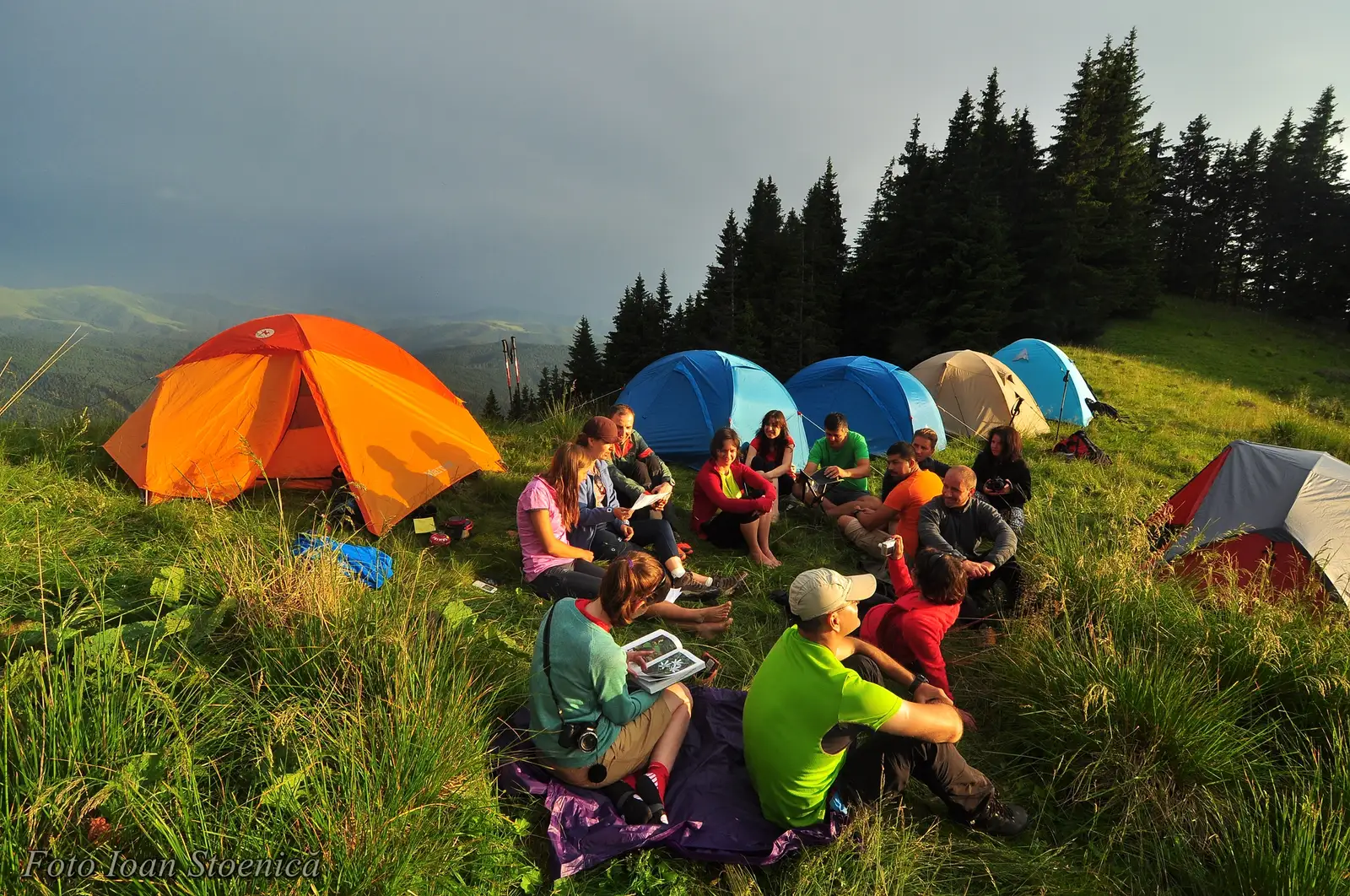
(Photo: Ioan Stoenica)
- Cognitive. Life in the middle of nature (even "occasionally", such as a several day trek sleeping in a tent or bivouac) makes you face multiple situations where you have to solve problems. The ability to find solutions, the creativity, the ability to improvise and to manage things in the unknown, the spontaneity, the concentration and the speed of reaction time in the decision-making process, thus flourish. In fact, nature "predisposes" to learning in its natural (and non-formal) sense, and those who enjoy the great outdoors regularly become small encyclopedias about the world, life and their mechanisms. A child who often goes out (with proper guidance, especially) in nature will not be one of those who can recognize brand logos but can not identify common trees!
- Emotional. A direct contact with the natural environment has the special gift of a face-to-face encounter with ourselves, which can be a profoundly transforming experience, and it can materialize in emotional growth. A healthy emotional person is aware of their own emotions (which they can identify and name) and is capable of self-control. In the midst of nature, you do not only find the quiet to "settle your thoughts", but also difficult situations to push your boundaries, improving your quality that is said to be absent in the young generation: frustration tolerance.
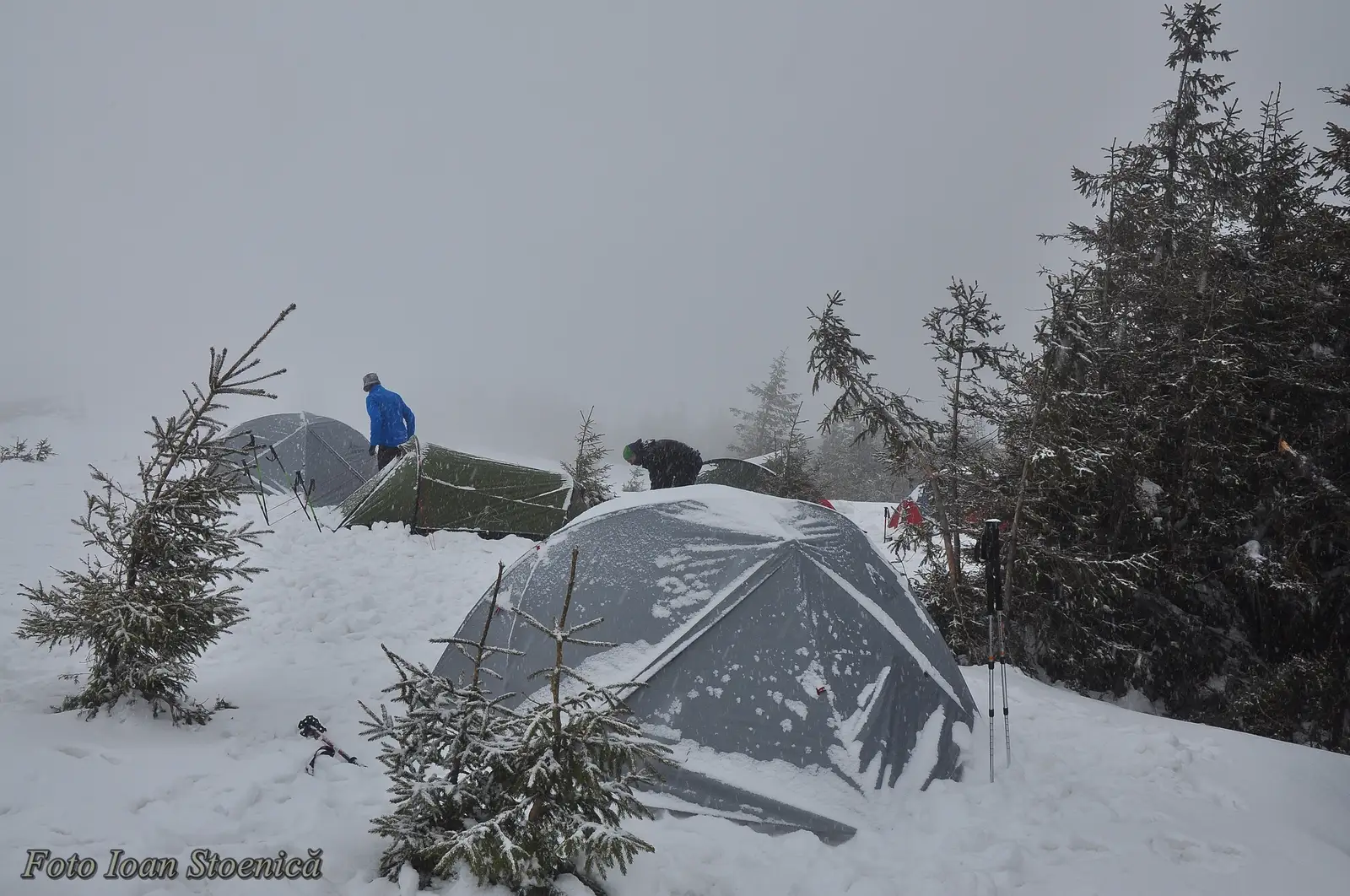
- Social. Whether a person joins large or small group hikes (where socializing is obvious), or whether he or she takes a break from social life and walks alone, walking in nature can not fail to influence the individual's relationship with the others. Either you finally put your phone away and talk to real people, or you turn off the same phone and talk to your own thoughts. Team spirit also develops in nature: it is no news that friendships that come to life in the mountains are stronger and last longer. On the mountain, people get deeper into the meaning of communion with others, of compassion, of empathy or generosity, of belongingness (from this last point of view, the "social class" of the mountaineers is distinguished by specific apparel, language or accessories, wherever its members may be).
- Spiritual. I often hear people say: "the forest/the mountain make me feel so small". Starting from this finding and in full correlation with the above, an experience in the middle of nature can become a "meeting place" with our deep search of spiritual. It is certainly not a coincidence that all the sacred places of different cultures and religions in the world (altars, temples, monasteries) are located in the midst of forests or on mountain peaks. A deep connection with nature, in all its aspects - especially the harshest - can open up perspectives beyond rationality, beyond the usual "thoughts and feelings". But that's something you have to discover by yourself, so do not stay indoors!
There is still a lot to say in this matter. One can write endless pages about the miracles that occurred to the human body or mind in nature. This short list is rather an invitation to dialogue...
What has nature healed, developed or made you discover?
Ilinca Stoenică
August 2018






Nu există comentarii încă. Fii primul care comentează!